
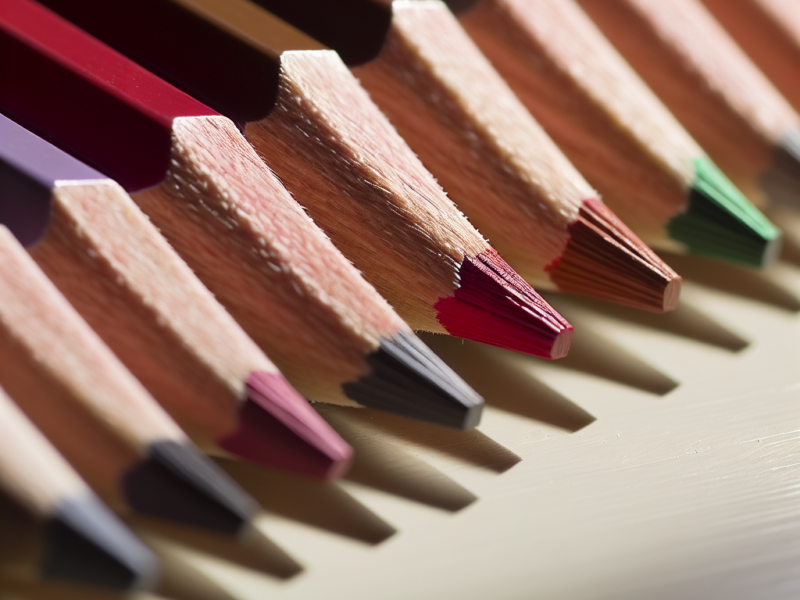
How Colored Pencils Are Made for Art Students
For art students, colored pencils are more than just tools—they’re extensions of creative thought. Whether you’re sketching a still life, layering hues in a portrait, or experimenting with mixed media, the quality and composition of your pencils can significantly affect your results. But have you ever wondered what goes into making a colored pencil? Understanding the materials and manufacturing process can help you choose the right pencils for your artistic goals and deepen your appreciation for the craftsmanship behind each stroke.
What Makes a Colored Pencil Different from a Regular Pencil?
At a glance, colored pencils resemble traditional graphite pencils. However, the core difference lies—quite literally—in the core. Instead of graphite, colored pencils contain a blend of pigments, binders, and additives that give them their vibrant colors and smooth application. These ingredients are carefully balanced to ensure the pencil performs well on paper and holds up under pressure, blending, and layering.
Unlike graphite pencils, which are primarily designed for writing or monochrome sketching, colored pencils are tailored for visual artistry. They come in wax-based, oil-based, and even water-soluble variations, each offering unique textures and blending capabilities. For art students, understanding these differences can make a world of difference in selecting the right material for a given technique.
Core Components: What’s Inside a Colored Pencil?
The heart of every colored pencil is its core—commonly referred to as the “lead,” though it contains no actual lead. According to PencilChina, the core is typically composed of three main ingredients:
- Pigments: These are finely ground color particles that determine the hue and opacity of the pencil.
- Binders: Substances like wax, oil, or gum arabic that hold the pigment particles together and allow them to adhere to paper.
- Fillers: Materials like kaolin clay or talc that modify the texture, hardness, and smoothness of the pencil.
The specific formulation of these ingredients affects how the pencil behaves—whether it’s soft and buttery, firm and precise, or somewhere in between. Premium brands often use high concentrations of lightfast pigments, ensuring the artwork remains vibrant over time.
Step-by-Step: How Colored Pencils Are Manufactured
The process of making colored pencils is a blend of industrial precision and artistic sensitivity. Let’s walk through the major stages involved in turning raw materials into the tools art students use every day.
| Step | Process | Purpose |
|---|---|---|
| 1 | Mixing Pigments and Binders | Create the colored core with desired texture and color intensity |
| 2 | Extruding the Core | Shape the mixture into thin, uniform rods |
| 3 | Drying and Hardening | Stabilize the core for durability and usability |
| 4 | Wood Casing Preparation | Cut and groove wooden slats to house the core |
| 5 | Encasing the Core | Sandwich the core between two grooved slats and glue them together |
| 6 | Shaping and Lacquering | Shape the pencil and apply protective coatings |
| 7 | Quality Control and Packaging | Ensure consistency, color accuracy, and final presentation |
Mixing and Extruding: The Art of the Core
According to Luuk Minkman, the first critical step in manufacturing is the precise mixing of pigments with binders and fillers. This mixture is kneaded until it achieves a dough-like consistency. The mixture is then extruded through a die to form long, spaghetti-like strands of colored core. These are cut into pencil-length rods and dried to remove excess moisture, ensuring they won’t crumble during use.
The drying process is especially crucial for wax-based and oil-based pencils, as it determines the final hardness and texture. Manufacturers may cure the cores in ovens or use air-drying methods depending on the formulation.
Wood Casing: More Than Just a Shell
Once the core is ready, it needs a protective casing. Most colored pencils use high-quality woods like incense cedar or basswood, prized for their smooth grain and ease of sharpening. The wood is cut into slats, grooved to hold the core, and then paired with a matching slat to form a sandwich around the core.
Faber-Castell, a renowned name in the industry, emphasizes the importance of sustainable wood sourcing and precision cutting in their pencil production. In their article “How to Make the Best Quality Colored Pencils”, they highlight how each pencil is shaped, sanded, and lacquered multiple times to ensure a smooth, durable finish.
Finishing Touches: Shaping, Lacquering, and Quality Control
After the casing is glued and dried, the pencil is milled into its final shape—round, hexagonal, or triangular. It’s then sanded and coated with several layers of lacquer, both for aesthetics and protection. The color of the lacquer often matches the core, helping artists identify hues at a glance.
Finally, each pencil undergoes rigorous quality control. This includes color testing, breakage resistance, and consistency checks. Only pencils that meet strict standards make it into the final packaging. For art students, this attention to detail ensures that each pencil delivers the expected performance—whether it’s a smooth color laydown or predictable blending results.
Wax vs. Oil vs. Water-Soluble: What Should Art Students Choose?
Not all colored pencils are created equal. The binder used in the core—wax, oil, or water-soluble material—greatly influences how the pencil behaves. Here’s a quick comparison to help art students navigate their options:
| Type | Binder | Characteristics | Best For |
|---|---|---|---|
| Wax-Based | Wax | Soft, vibrant, blendable; may experience wax bloom | Layering, burnishing, general illustration |
| Oil-Based | Vegetable oils | Harder, precise, less bloom; excellent for detail | Realism, fine line work, detailed rendering |
| Water-Soluble | Water-activated binders | Acts like watercolor when wet; versatile | Mixed media, watercolor effects, sketching |
As noted in the Alabama Art guide, the choice of pencil depends on the technique and desired outcome. For example, students focusing on realism might gravitate toward oil-based pencils for their precision, while those exploring expressive color fields may prefer the smooth blendability of wax-based options.
Why Material Knowledge Matters for Art Students
Understanding how colored pencils are made isn’t just a curiosity—it’s a practical advantage. When students know what goes into their tools, they can make informed decisions that align with their artistic goals, budget, and project needs. For instance, knowing that a pencil uses lightfast pigments can reassure students that their work won’t fade over time, especially if they plan to exhibit or sell their art.
Moreover, material knowledge fosters a deeper respect for craftsmanship. It connects students to the broader ecosystem of art supply manufacturing—one that balances tradition, innovation, and sustainability. Whether you’re buying a student-grade pack or investing in a professional set, you’re participating in a lineage of artistic tools that have evolved through centuries of refinement.
Final Thoughts: The Pencil as an Artistic Partner
From the careful selection of pigments to the precision of wood casing, the making of colored pencils is a testament to both science and art. For art students, these tools are not just instruments—they’re collaborators in the creative process. By understanding how colored pencils are made, students can better appreciate their capabilities, choose the right tools for their work, and develop a more intentional approach to their practice.
So the next time you pick up a colored pencil, remember: you’re holding the result of countless decisions—about materials, design, and quality—that all come together to support your vision. And that’s a story worth drawing with.