
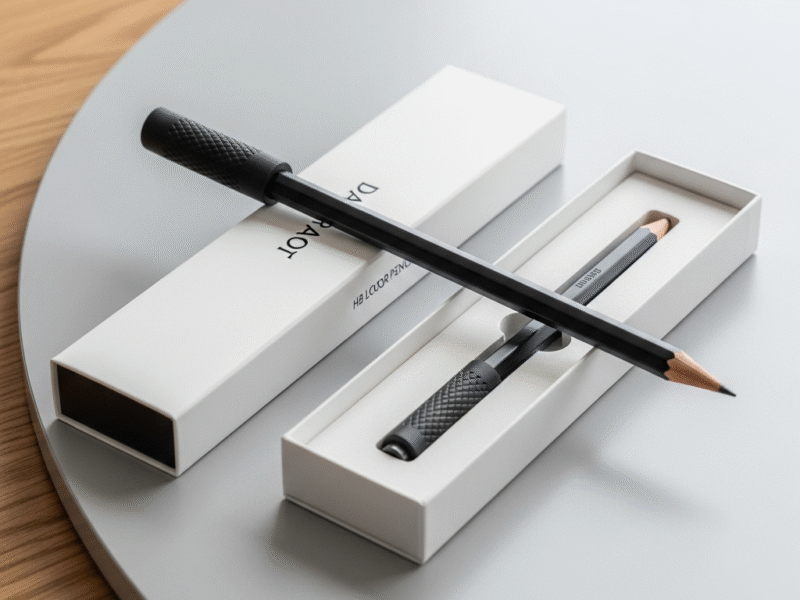
The tactile connection between a writer and their instrument is often overlooked in an age of digital dominance. Yet, for those who spend hours sketching, drafting, or journaling, the physical feedback of a pencil is paramount. High-quality graphite pencils with custom grip represent the intersection of traditional craftsmanship and modern ergonomic science, providing a solution to the hand fatigue that has plagued writers for centuries.
Choosing the right pencil involves more than just selecting a lead grade. It requires an understanding of how the barrel interacts with the muscles of the hand. When we talk about “custom” grips, we refer to both the physical attachments that can be added and the integrated designs that manufacturers build directly into the pencil’s architecture.
The shift toward ergonomic writing tools is not merely a trend; it is a response to a growing awareness of repetitive strain injuries (RSI). A well-designed grip allows for a lighter touch, reducing the “death grip” that many users unconsciously adopt when using standard hexagonal or round barrels.
The Anatomy of Ergonomic Graphite Pencils
To understand why graphite pencils with custom grip are superior for long-form work, one must look at the structural components of the tool. A standard pencil consists of a graphite core, a wooden casing (usually incense cedar or basswood), and a finish. The custom grip adds a fourth, critical layer: the interface.
In professional manufacturing, the grip is often designed to correct finger placement. Triangular barrels, for instance, are naturally ergonomic because they provide three flat surfaces for the thumb, index, and middle fingers. When these barrels are enhanced with a non-slip coating or a raised texture, they become a high-performance tool for artists and students alike.
Beyond the shape, the material of the grip determines its effectiveness. A hard plastic grip offers durability but little in the way of shock absorption. Conversely, a high-quality silicone or soft-touch rubberized coating provides a “squish” factor that conforms to the unique contours of the user’s hand, effectively personalizing the tool every time it is held.
For those interested in the deep history of how these components are assembled, you can find more information in this Pencil Manufacturing Processes guide, which details the complex bonding of wood and lead.
Material Science: What Makes a Grip “Custom”?
The term “custom” in the world of stationery often refers to the ability to adapt the tool to a specific need. When looking for graphite pencils with custom grip, you will encounter various materials, each offering different levels of friction and comfort.
Silicone is perhaps the most popular material for high-end custom grips. It is hypoallergenic, resistant to skin oils, and maintains its shape over years of use. In manufacturing, silicone can be molded with specific textures—micro-dots, ridges, or waves—to provide extra “bite” for users who struggle with sweaty palms or limited grip strength.
Thermoplastic Elastomers (TPE) are another common choice. TPE offers a rubber-like feel but is much easier to recycle and process during the manufacturing phase. It allows for vibrant color customization, which is essential for brands looking to create a specific aesthetic or for schools that want to color-code pencils by grade or subject.
Foam grips, while softer, are generally considered a temporary or “aftermarket” customization. They offer the highest level of cushioning but tend to degrade over time as they absorb sweat and dirt. For a professional-grade experience, an integrated rubberized or textured grip is almost always the better investment for a buyer.
Comparing Grip Materials and Their Benefits
| Material | Durability | Comfort Level | Best For… |
|---|---|---|---|
| Silicone | High | Excellent | Professional artists and long-form writers. |
| Textured Wood | Very High | Moderate | Users who prefer a traditional feel with added slip resistance. |
| Rubber (TPE) | Medium | High | General office use and student stationery. |
| Memory Foam | Low | Maximum | Users with arthritis or significant hand strain. |
The Impact of Lead Grade on Grip Pressure
It might seem counterintuitive, but the lead inside the pencil dictates how much you rely on the grip. When using graphite pencils with custom grip, the hardness of the graphite (the “grade”) changes the amount of downward pressure required to leave a mark.
An HB lead is the standard for general writing. However, if you find yourself pressing hard to make the marks legible, you will experience fatigue regardless of how comfortable the grip is. Moving to a softer grade, like a 2B or 4B, allows the pencil to glide across the paper with minimal effort.
In this scenario, the custom grip serves to stabilize the hand rather than cushion it against heavy pressure. For technical drawing, where a harder lead (like 2H or 4H) is used for fine lines, a firm, textured grip is essential for the precision required to maintain consistent line weights without the pencil slipping.
To dive deeper into how lead hardness affects your writing experience, refer to this guide on Understanding Pencil Lead Grades.
Ergonomics for Different User Personas
Not all hands are created equal, and the search for graphite pencils with custom grip should be guided by the specific needs of the user. For children just learning to write, a custom grip is often a pedagogical tool. It teaches the “tripod grasp,” which is essential for developing fine motor skills and preventing lifelong hand-cramping habits.
Left-handed writers face a unique set of challenges. Because they “push” the pencil across the page rather than “pulling” it, they often adopt a hooked hand position to see what they are writing and to avoid smearing the graphite. A custom grip with a specific ergonomic “twist” can help reorient the hand, making the writing process much more natural and reducing the risk of smudging.
For the elderly or those with carpal tunnel syndrome, a thicker diameter barrel combined with a soft-touch grip is a game-changer. These designs reduce the range of motion required to hold the tool, allowing the larger muscles of the arm to take over some of the work from the smaller, more sensitive muscles of the fingers.
Supply Chain and Manufacturing Insights
From a manufacturing perspective, producing graphite pencils with custom grip involves specialized machinery. Unlike standard pencils that are simply painted or lacquered, pencils with integrated grips often undergo a secondary process called “overmolding” or a multi-stage dipping process.
In overmolding, the wooden barrel is placed into a secondary mold where the grip material is injected around it. This creates a seamless bond between the wood and the grip, ensuring that the grip won’t slide off during sharpening. This is a critical quality marker for buyers; cheap pencils often use “sleeves” that lose their friction and eventually spin around the barrel, rendering the grip useless.
Furthermore, the choice of wood matters. A custom grip adds weight and changes the center of balance. Premium manufacturers often use incense cedar because its straight grain and consistent density provide a stable core that balances well with the added weight of a silicone or rubber grip.
Customization for Branding and Professional Identity
In the B2B sector, graphite pencils with custom grip are a powerful branding tool. Unlike a standard promotional pen that might be tossed away, a high-quality ergonomic pencil is a tool that people keep and use until it is a tiny stub.
For engineering firms, architectural offices, and creative agencies, providing staff and clients with customized ergonomic pencils sends a message of quality and care for employee well-being. Customization options often include laser-engraved logos on the wood, custom-colored grips that match corporate palettes, and even scented “graphite” formulations.
When purchasing for a brand, it is important to check the “Shore hardness” of the grip. This is a measure of how hard or soft the material is. A Shore A rating of 40-50 is generally the “sweet spot” for writing comfort—soft enough to be comfortable, but firm enough to provide control.
Environmental Considerations in Custom Grips
As the world moves toward more sustainable office supplies, the materials used in graphite pencils with custom grip are coming under scrutiny. Traditionally, soft grips were made from PVC (polyvinyl chloride), which can release harmful phthalates and is difficult to recycle.
Modern high-end stationery brands are shifting toward PVC-free rubbers and bio-based plastics. Some innovative manufacturers are even experimenting with “integrated wood grips,” where the wood itself is carved with ergonomic grooves and then treated with a high-friction, eco-friendly matte finish. This provides the benefits of a grip without the use of synthetic polymers.
Buyers should look for FSC (Forest Stewardship Council) certification on the wood and “non-toxic” or “phthalate-free” labels on the grip components. A sustainable pencil that lasts longer because it is comfortable to use is ultimately better for the environment than a box of cheap, uncomfortable pencils that end up in the trash.
For a look at some of the best-rated ergonomic options currently available, you might find this Best Ergonomic Pencils Guide helpful for comparing specific brand performance.
Sharpening Pencils with Integrated Grips
One common concern for buyers of graphite pencils with custom grip is whether they can be sharpened in a standard sharpener. The answer depends on the design of the grip. If the grip extends too far down the barrel toward the tip, it can interfere with the sharpening blades or get stuck in the entry hole of a mechanical sharpener.
Professional-grade ergonomic pencils are designed with a “clearance zone” between the end of the grip and the start of the sharpened point. This ensures that the user gets the benefit of the grip right up until the point of contact with the paper, while still allowing the pencil to fit into standard desktop or handheld sharpeners.
If you are choosing a pencil with an exceptionally thick custom grip, you may need to invest in a “large hole” or multi-diameter sharpener. These are common in the art world and are specifically designed to accommodate the varied diameters of specialized drawing tools.
A Buyer’s Checklist for Custom Grip Pencils
Before making a bulk purchase or investing in a premium set of graphite pencils with custom grip, consider the following factors to ensure you are getting the best value for your needs:
1. **Grip Placement:** Does the grip start high enough to allow for easy sharpening?
2. **Material Feel:** Is the material “tacky” (which can attract dust) or “smooth-touch” (which stays clean)?
3. **Barrel Shape:** Is the underlying barrel triangular, hexagonal, or round? Triangular is usually the most ergonomic.
4. **Lead Centering:** In manufacturing, is the graphite core perfectly centered? An off-center core will break more easily when pressure is applied through a custom grip.
5. **Aesthetic Longevity:** Will the color of the grip fade or yellow over time? Silicone is generally the most UV-resistant.
By paying attention to these manufacturing details, you can select a tool that doesn’t just look good on a desk, but actually improves the quality of your work and the health of your hands.
The Future of Tactile Writing Tools
The evolution of graphite pencils with custom grip continues as technology advances. We are beginning to see 3D-printed custom grips that are digitally modeled to fit a specific individual’s hand. While currently a niche for high-end bespoke stationery, this technology highlights the importance of the human-tool interface.
In a world that is increasingly digital, the “analog” experience of pencil on paper provides a cognitive break and a different type of creative freedom. By choosing a pencil that respects the physiology of the hand, writers and artists can focus entirely on their ideas rather than their discomfort.
Whether you are a student preparing for long exams, an artist working on a detailed graphite portrait, or a professional who appreciates the feel of a well-made tool, the custom grip pencil is a testament to the fact that even the simplest tools can be perfected through thoughtful design and material science.
Investing in a high-quality writing instrument is an investment in your own productivity. The right graphite pencils with custom grip will not only last longer but will also make every word and every line a more enjoyable experience. From the selection of the wood to the Shore hardness of the silicone, every detail matters in the pursuit of the perfect mark.