
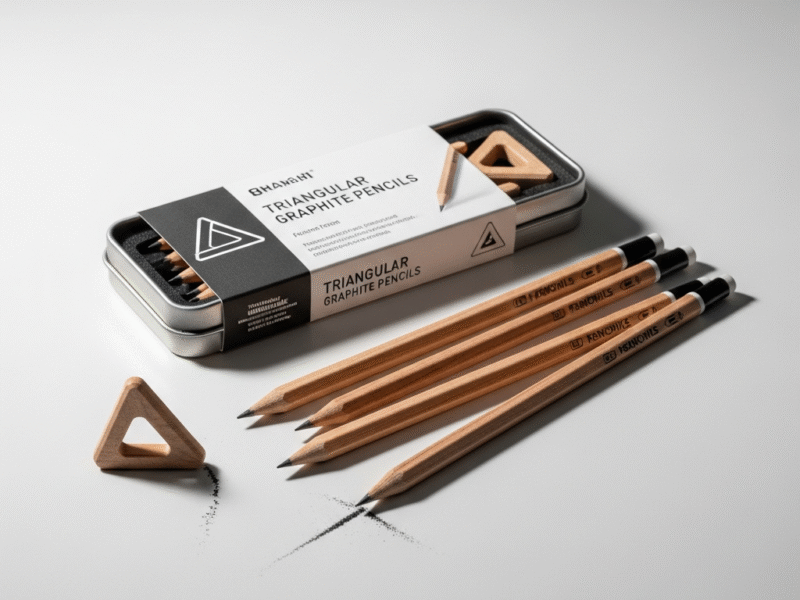
The journey of learning to write is a significant milestone in a child’s cognitive development. It is the moment where thoughts begin to take physical form, transitioning from abstract ideas in the mind to concrete markings on paper. However, for many young learners, the physical act of gripping a pencil can be a source of frustration. Traditional round or hexagonal pencils can often feel slippery or awkward in small hands that are still developing fine motor skills. This is where the specific design of triangular graphite pencils for kids becomes an essential tool in the educational arsenal.
By providing a more ergonomic grip, these three-sided writing instruments help establish the “tripod grip”—the optimal way to hold a pencil using the thumb, index, and middle fingers. When a pencil is shaped with three flat sides, it provides a natural resting place for each of these fingers, reducing the muscular strain required to maintain control. This structural advantage allows children to focus less on the mechanics of holding the tool and more on the formation of letters and numbers.
The Ergonomic Science Behind the Three-Sided Barrel
From a physiological perspective, the human hand is not naturally designed to exert high pressure on a thin, round object for extended periods. When children first pick up a writing tool, they often use a “palmar supinate” or “digital pronate” grip—basically, a fist-like hold. As they progress toward the mature tripod grip, the shape of the tool they use dictates how quickly and comfortably they reach that milestone.
The primary benefit of triangular graphite pencils for kids is the increased surface area in contact with the fingertips. In a standard round pencil, the contact point is minimal, leading to the pencil rotating in the hand. A triangular barrel prevents this rotation. For a child, this means the pencil stays exactly where they put it, allowing for consistent pressure and better line control. This is particularly important for children with dysgraphia or those who struggle with sensory processing, as the clear tactile feedback of the flat sides helps them “feel” the pencil’s orientation.
Beyond the grip, there is a practical “anti-roll” benefit. Every teacher and parent knows the sound of a pencil rolling off a desk and onto the floor. Triangular pencils stay put. This reduces distractions in the classroom and keeps the focus on the task at hand. This simple design change effectively addresses both the biomechanical needs of the child and the environmental needs of the learning space.
Manufacturing Insights: How High-Quality Graphite is Made
To understand why some pencils perform better than others, we have to look at the manufacturing process. The “lead” in a pencil isn’t lead at all; it is a composite of graphite and clay. The ratio of these two components determines the hardness and darkness of the mark. For early learners using triangular graphite pencils for kids, manufacturers often lean toward a slightly softer core.
The process begins by grinding graphite and clay into a fine powder, mixing them with water, and extruding the paste through a thin tube. These “leads” are then kiln-fired at temperatures exceeding 1,000 degrees Celsius. To ensure a smooth writing experience, the fired leads are often soaked in hot wax or oil. This fills the microscopic pores in the graphite, allowing the pencil to glide across the paper without “scratching.”
In high-end triangular pencils, the bonding process (often called “SV bonding”) is crucial. This involves gluing the lead to the wood casing along its entire length. This prevents the lead from shattering inside the pencil if it is dropped. For kids, who are notoriously hard on their belongings, a well-bonded pencil means fewer broken tips and less time spent at the sharpener. You can learn more about the technical standards of pencil manufacturing from the Pencil Makers Association, which sets safety and quality benchmarks for the industry.
Top Brand Recommendations and Market Insights
When searching for the best tools, it helps to look at the brands that have spent decades, or even centuries, refining their craft. Insights from the stationery community, including discussions on platforms like Reddit’s pencil enthusiasts, highlight several standout performers that cater specifically to the needs of young writers.
Musgrave Pencil Company, based in Tennessee, is a legendary name in the American stationery scene. They offer a range of jumbo and “mini-jumbo” options that are frequently cited as the gold standard for affordability and functionality. Their “Tot” and “Choo-Choo” models are specifically designed with oversized triangular barrels to accommodate the larger grip of a preschooler. Their “My-Pal” and “Cub” lines serve as the perfect bridge for primary-aged students who are ready for a slightly thinner, but still ergonomic, diameter.
Ticonderoga is another heavyweight in the field. Their “Tri-Write” series is widely available and recognized for its consistent graphite quality and the iconic yellow finish. Ticonderoga pencils use a proprietary graphite formula that is known for being exceptionally smooth. Meanwhile, JR Moon is often praised for offering effective triangular options that provide great value for school districts buying in bulk. These brands understand that triangular graphite pencils for kids must balance durability with ease of use.
Comparing the Best Options for Young Learners
Choosing the right pencil depends on the child’s age, hand size, and current writing proficiency. Below is a comparison of some of the top-rated triangular options available on the market today:
| Brand & Model | Diameter Type | Key Feature | Best For |
|---|---|---|---|
| Musgrave “Tot” | Jumbo | Extra thick barrel | Preschool/Early Pre-K |
| Faber-Castell Jumbo Grip | Jumbo | Non-slip grip dots | Sensory feedback |
| Ticonderoga Tri-Write | Standard | Ergonomic shape | Primary grades (K-3) |
| Lyra Ferby | Short/Jumbo | High pigment, thick lead | Art & early writing |
The Importance of Wood Sourcing in Pencil Quality
Not all wood is created equal when it comes to the casing of triangular graphite pencils for kids. The most common woods used in high-quality pencils are Incense Cedar and Basswood. Incense Cedar is the premium choice; it has a straight grain that allows the sharpener blade to slice through cleanly without splintering. It also has that nostalgic “pencil smell” that many associate with school days.
Lower-cost pencils may use cheaper woods like poplar or even recycled wood composite. These materials are often more brittle and can cause the wood to “catch” or “shred” during sharpening, which is incredibly frustrating for a child. When a pencil doesn’t sharpen smoothly, the wood may unevenly support the graphite core, leading to frequent breakage. For parents and educators, investing in pencils made from genuine cedar or high-grade basswood ensures that the child spends more time writing and less time struggling with a broken tool.
The sustainability of these woods is also a major talking point in the stationery industry. Most reputable brands now source their wood from FSC-certified (Forest Stewardship Council) forests. This ensures that the production of triangular graphite pencils for kids does not contribute to deforestation, making them a more eco-friendly choice compared to plastic-barrel mechanical pencils. For more on the environmental impact of stationery, the Forest Stewardship Council provides extensive resources on responsible forestry.
Lead Hardness and Its Impact on Learning
In the United States, we are most familiar with the “#2” pencil, which corresponds to the international “HB” grade. However, for children just starting out, an HB lead might actually be too hard. Because young children haven’t fully developed the hand strength to press down firmly, a hard lead can result in faint, barely-visible lines. This can lead to the child pressing too hard, causing hand fatigue and cramping.
Many triangular graphite pencils for kids, especially jumbo varieties like those from Lyra or Faber-Castell, utilize a “B” or “2B” lead. These leads have a higher graphite-to-clay ratio, making them softer and darker. A softer lead allows the child to produce a clear, dark line with minimal pressure. This immediate visual feedback is incredibly rewarding for a beginner and encourages them to keep practicing. As the child gets older and their hand strength improves, they can naturally transition back to the standard HB hardness.
Addressing the Sharpening Challenge
One logistical hurdle with triangular graphite pencils for kids—specifically the jumbo versions—is that they don’t always fit in a standard pencil sharpener. Many parents purchase these ergonomic tools only to find their existing sharpener’s entry hole is too small. When buying triangular pencils, it is wise to look for a dual-hole sharpener specifically designed for both standard and oversized barrels.
Furthermore, because of the triangular shape, the sharpener must be held with a bit more intention. Some high-end pencil brands produce their own sharpeners calibrated to the exact diameter and angle of their pencils. This “system” approach ensures that the wood is cut at the optimal angle to support the lead, further reducing the chance of breakage. It’s a small detail, but in the context of a classroom with thirty children, a sharpener that works efficiently is a vital piece of equipment.
The Long-Term Benefits of Ergonomic Writing Tools
Investing in triangular graphite pencils for kids is about more than just a temporary convenience; it is about building a foundation for literacy. When writing becomes physically comfortable, a child is more likely to engage with the task. They will write more, practice more, and ultimately develop better penmanship and spelling skills.
The transition from a jumbo triangular pencil to a standard triangular pencil, and eventually to a traditional hexagonal or round pencil, follows the natural growth of the child’s hand. By matching the tool to the developmental stage, we remove the physical barriers to learning. Educators often find that children who start with ergonomic tools develop a more relaxed grip, which prevents the chronic hand strain often seen in adults who “white-knuckle” their pens.
The stationery world is surprisingly deep, filled with nuances in wood quality, graphite blends, and ergonomic design. While a pencil might seem like a simple object, for a child, it is the key to a whole new world of communication. By selecting high-quality triangular graphite pencils for kids, you are providing them with a precision-engineered instrument designed to make their first steps into the world of writing as smooth and successful as possible. Whether you choose the heritage quality of Musgrave or the innovative designs of Faber-Castell, the focus remains the same: supporting the hand that holds the future.