
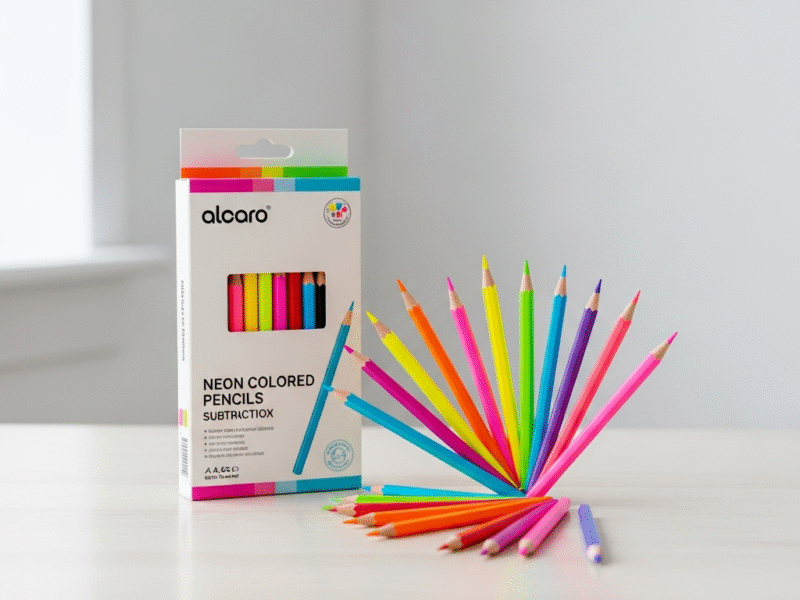
When you open a fresh box of stationery, there is a specific sensory experience that triggers creativity—the smell of cedarwood, the sharp points of lead, and the promise of a blank page. For children, this excitement is amplified tenfold when those colors aren’t just standard reds and blues, but electric pinks, radioactive greens, and solar yellows. Finding the neon colored pencils for kids is about more than just picking the brightest box on the shelf; it is about finding tools that balance pigment payoff with the durability required for younger, often heavy-handed artists.
Neon pigments occupy a unique space in the world of art supplies. Unlike traditional pigments that absorb and reflect specific wavelengths of light, neon or fluorescent pigments utilize “luminescence.” They absorb ultraviolet light—which is invisible to the human eye—and re-emit it as visible light. This creates that “glow” effect that makes a drawing jump off the paper. For a child, this isn’t just science; it’s magic. However, from a manufacturing standpoint, creating a high-quality neon pencil is a complex task that involves balancing fugitive pigments with stable binders.
In this guide, we will explore the landscape of high-visibility stationery. We will look at why certain brands excel in “trippy” or high-contrast art, how to choose sets that won’t snap under pressure, and the technical reasons why some neon pencils feel scratchy while others feel like butter. Whether your child is working on a school poster or exploring a “neon phase” in their personal sketchbook, understanding the nuances of these vibrant tools is essential for any parent or educator.
The Evolution of Fluorescent Art Supplies
Historically, neon colors were the domain of highlighters and markers. Pencils struggled to achieve the same level of vibrancy because the wax or oil binders used in pencil “leads” often muted the fluorescent effect of the pigments. Early iterations of neon colored pencils for kids were often disappointing, yielding pale, scratchy lines that looked nothing like the casing of the pencil. However, advancements in pigment milling and binder chemistry have changed the game.
Today’s manufacturers use finely ground fluorescent polymers encapsulated in resins. This allows the pigment to remain “suspended” within the wax core without being smothered. When a child applies a neon pencil to paper today, they are getting a much higher “laydown” of color. This is particularly important for children who are still developing their fine motor skills; they need a pencil that provides immediate visual feedback without requiring them to press down so hard that the lead snaps or the paper tears.
For those interested in the deeper chemistry of how these colors work, you can explore more about the science behind fluorescent pigments. Understanding that these colors react to UV light can also lead to fun educational activities, such as looking at a child’s artwork under a blacklight to see which colors truly “pop.”
What to Look for in Kids’ Neon Pencils
When shopping for neon colored pencils for kids, the criteria differ slightly from professional artist requirements. While a professional might prioritize lightfastness (the ability of a color to resist fading over time), a parent should prioritize safety, break resistance, and “blendability.” Neon pigments are notoriously “fugitive,” meaning they will fade faster than standard earth tones when exposed to sunlight. For a child’s refrigerator art, this is rarely a dealbreaker, but the physical durability of the pencil is paramount.
Look for “SV-bonded” or “securely bonded” cores. This is a manufacturing process where the lead is glued to the wood casing along its entire length, preventing the lead from shattering inside the pencil if it is dropped on a classroom floor. Additionally, consider the diameter of the pencil. Younger children (ages 3–6) often benefit from “jumbo” or triangular-shaped neon pencils, which provide a more ergonomic grip and prevent the pencil from rolling off the table.
Another factor is the “core softness.” Neon pencils tend to be slightly harder than standard colored pencils due to the nature of the fluorescent additives. However, the best brands manage to keep the core creamy. A soft core allows for better color mixing. While you might think neon colors don’t need to be mixed, children love seeing what happens when you layer neon pink over neon yellow—the result is a vibrant, electric orange that standard sets simply cannot replicate.
Bridging the Gap: From Kids’ Sets to “Trippy” Artist Tones
As children grow into their teens, their artistic interests often shift toward more complex styles. There is a significant community of artists, as noted in various Reddit discussions on “trippy” art styles, who seek out neon pencils for specific “acid” or “alien” aesthetics. This niche market focuses on high-contrast palettes that mimic the look of 1960s psychedelic posters or modern digital “glitch” art.
If your child is showing an interest in these advanced styles, transitioning them from basic neon colored pencils for kids to student-grade or even professional-grade fluorescents can be a huge boost to their confidence. In these “trippy” genres, the ability to blend a neon green into a deep violet is crucial for creating depth and a sense of “glow.” Standard cheap pencils often “wax bloom” (create a white, waxy film) when layered too heavily, whereas higher-quality neon pencils allow for multiple layers of vibrant pigment.
The transition to better supplies also teaches children about the value of their tools. When a child realizes that a specific pencil can achieve an “inner glow” effect on an alien character or a futuristic cityscape, they become more invested in the technical aspects of their hobby, such as sharpening techniques and paper selection. Darker or toned papers (like black or navy blue cardstock) are particularly effective for neon pencils, making the fluorescent colors appear even more luminous than they would on white paper.
Top Recommendations: A Tiered Approach
Not all neon pencils are created equal. Depending on the age of the child and the intended use, you might choose a budget-friendly set or a “prosumer” option. Below is a breakdown of some of the most reliable neon colored pencils for kids and young artists available today.
| Brand/Set Name | Primary Audience | Key Feature | Value Proposition |
|---|---|---|---|
| Crayola Neon Pencils | Toddlers & School Kids | Budget-friendly and non-toxic | Best for school projects and general coloring. |
| Faber-Castell Neon/Sparkle | Elementary Students | Break-resistant SV bonding | High durability for heavy-handed users. |
| Prismacolor Neon Set | Teens & Budding Artists | Ultra-soft wax core | Superior blending for “trippy” and 420-themed art styles. |
| Derwent Academy Neon | Art Students | Highly vibrant pigments | Great for high-contrast, graphic illustrations. |
| Holbein Luminous | Advanced Young Artists | Artist-grade fluorescent load | The “gold standard” for neon saturation and lightfastness. |
For those looking for the absolute pinnacle of neon performance, the Holbein Luminous range is often cited by enthusiasts as the best in the world. While these are technically professional pencils, they are an incredible gift for a child who has moved past the “scribble” phase and is taking their coloring seriously. They offer a buttery laydown that feels more like an oil pastel than a pencil, allowing for seamless gradients that are difficult to achieve with cheaper alternatives.
The Technical Side: How Neon Pencils are Manufactured
To truly understand the neon colored pencils for kids market, one must look at the OEM (Original Equipment Manufacturer) side of the industry. Most colored pencils are made by mixing pigments with a binder (wax or oil), extenders (like kaolin clay), and lubricants (like hydrogenated fats). Neon pencils require a different ratio. Because fluorescent pigments are less “dense” than traditional mineral pigments like Ochre or Ultramarine, manufacturers must increase the pigment-to-binder ratio to ensure the color doesn’t look transparent.
This increased pigment load can make the lead brittle. This is why you will often notice that neon pencils from discount stores snap easily. Higher-end manufacturers solve this by using specialized synthetic waxes that provide flexibility. Furthermore, the wood used in the casing matters. High-quality incense cedar is preferred because it sharpens cleanly. If a manufacturer uses cheap, “splintery” wood, it can put uneven pressure on the brittle neon core during sharpening, leading to the dreaded “dropping lead” syndrome where the tip falls out as soon as it touches the paper.
When selecting neon colored pencils for kids, a quick “scratch test” can reveal quality. If the pencil feels like it is “skating” over the paper without leaving much color, it has too much wax and not enough pigment. If it leaves a thick, vibrant line with very little pressure, you have found a high-quality manufacturer. This tactile feedback is vital for children, as it prevents hand fatigue during long drawing sessions.
Creative Applications and Art Techniques
Once you have selected the neon colored pencils for kids, the next step is encouraging creative use. Neon pencils aren’t just for coloring in the lines; they are excellent for “special effects.” One popular technique is the “Halo Effect.” By drawing a character with standard colors and then tracing a thin line of neon yellow or pink around the silhouette, a child can make the character look like it is glowing or electrified.
Another technique is “Neon Under-layering.” Have the child color a small area in neon green, then lightly layer a standard dark green over the top. The neon “shines” through the top layer, giving the color a depth and luminosity that standard pencils can’t achieve on their own. This is a great way to introduce kids to the concept of color theory and layering, which are foundational skills in representational art.
For kids interested in “alien” or “trippy” themes, encourage them to experiment with “Reverse Value” drawing. Give them a sheet of black paper and let them use only neon colors. On black paper, neon colors function as the “highlights” rather than the mid-tones. This forces the child to think differently about light and shadow—instead of adding darkness to a white page, they are adding light to a dark page. This cognitive shift is excellent for developing spatial awareness and artistic logic.
Health, Safety, and Sustainability
Safety is a non-negotiable factor when choosing neon colored pencils for kids. Look for the “AP” (Approved Product) seal from the ACMI (Art and Creative Materials Institute). This ensures that the pencils are non-toxic and have been evaluated by a toxicologist. Since kids often chew on the ends of their pencils or get pigment on their hands (and then in their mouths), ensuring that the fluorescent dyes are heavy-metal free is essential.
Sustainability is also becoming a major factor in the stationery industry. Many leading brands now use FSC-certified wood, ensuring that the cedar or basswood used for the pencils is harvested from responsibly managed forests. As an expert in the field, I recommend looking for brands that use water-based lacquers for the exterior coating of the pencil. Traditional solvent-based paints can emit VOCs (Volatile Organic Compounds), which are better avoided in a child’s environment.
Furthermore, consider the longevity of the set. While neon pencils are fun, they are often used up faster than standard colors because kids love the vibrancy. Buying sets that offer “open stock” (the ability to buy individual replacement pencils) can be more sustainable and cost-effective in the long run. If your child uses up the neon orange in a week but hasn’t touched the neon blue, you can simply replace the one pencil rather than buying a whole new box.
Maintenance and Longevity of the Artwork
As mentioned earlier, the primary drawback of neon pigments is their lack of lightfastness. Neon colored pencils for kids are generally made with dyes that are sensitive to UV radiation. If a masterpiece is left on a sunny window sill, the vibrant pink will likely turn into a dull grey within a few months. To preserve a child’s favorite drawings, it is best to keep them in a sketchbook or a folder away from direct sunlight.
For “serious” young artists who want to display their work, a quick spray with a UV-resistant fixative can help. However, this should always be done by an adult in a well-ventilated area. The fixative acts as a “sunscreen” for the pigments, blocking the rays that break down the chemical bonds of the fluorescent dyes. Teaching a child about the “delicacy” of certain colors also introduces them to the professional world of art conservation and the science of materials.
Finally, sharpening is key. Because neon cores can be slightly more brittle, using
Related Reading
- Top Durable Colored Pencils for Art Projects
- Retail-Ready Colored Pencils Packs: Your Buying Guide
- The Best Non-Toxic Graphite Pencils for Kids
- Top Colored Pencils with Sharpener for Artists
- Buy EN71 Compliant Colored Pencils for Safety and Quality
- Seahorse® Pencils for Schools: Enhance Kids’ Creativity
- Top 5 Budget-Friendly Colored Pencils for Artists
- Seahorse® Pencil Safety for Kids Review