
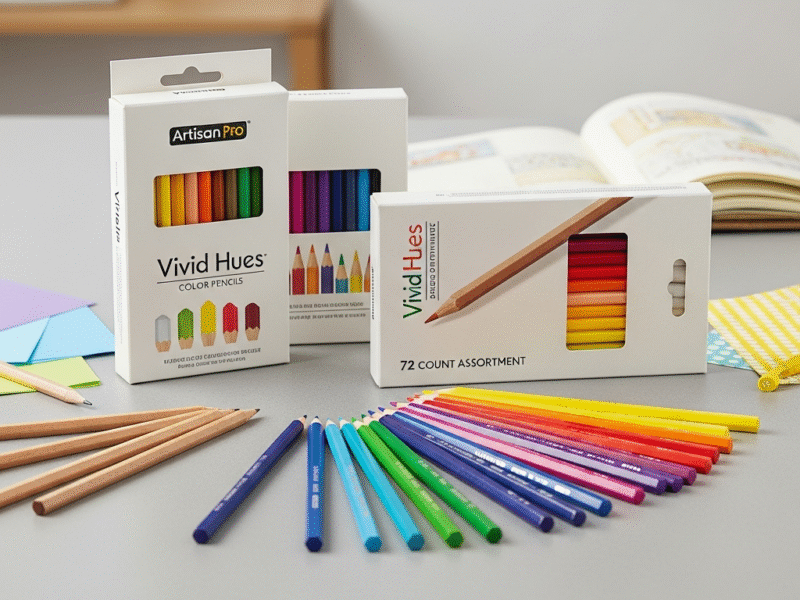
The world of scrapbooking has evolved from simple photo albums to complex, mixed-media art journals that require high-quality tools for longevity and aesthetic appeal. When you are managing large-scale workshops, running a classroom, or working on a massive family archive project, the need for colored pencils for scrapbooking bulk becomes a logistical and creative necessity. Purchasing in volume doesn’t just save money; it ensures consistency in your color palette across hundreds of pages.
Selecting the right pencils involves more than just picking a box with a variety of shades. For scrapbooking, the stakes are higher because these pages are meant to last for decades. You need to consider lightfastness, the chemical composition of the core, and how the pigment interacts with the unique “tooth” of scrapbooking cardstock. A professional approach to procurement means looking at the manufacturing standards and the specific needs of paper crafters who demand vibrancy and durability.
The tactile experience of using a high-quality pencil can fundamentally change how you approach page layouts. Whether you are shading around a photograph to create depth or using a blender pencil to soften a hand-drawn border, the quality of the wax or oil binder in your bulk set will determine the final look. We are seeing a significant shift in the market where bulk buyers are prioritizing professional-grade cores over “student-grade” options to avoid the frustration of breakage and dull colors.
The Anatomy of a Scrapbook-Ready Pencil
To understand why certain pencils perform better than others, we must look at the internal chemistry. A colored pencil consists of a pigment, a binder (wax or oil), and a wooden casing. In the context of colored pencils for scrapbooking bulk, the binder is particularly important. Wax-based pencils are softer and easier to blend, making them ideal for the layering techniques common in scrapbooking. However, they are prone to “wax bloom,” a natural oxidation process that can leave a hazy film over your art.
Oil-based pencils, on the other hand, feature a harder core that holds a sharp point longer. This is essential for fine detail work, such as journaling or intricate floral borders. While they are slightly harder to blend than their wax counterparts, they are often preferred by archival artists because they do not suffer from wax bloom. When buying in bulk, a mix of both types can be beneficial, but for most hobbyists, a high-pigment wax core remains the industry standard for its versatility.
The casing also matters significantly. Most premium pencils use California Incense-cedar, a wood that sharpens cleanly without splintering. In mass-market bulk sets, you might find basswood or even plastic composites. While these are cost-effective, they can be difficult to sharpen, leading to wasted lead and frustration during a creative session. For further reading on wood standards, you can visit the Forest Stewardship Council (FSC) website to learn about sustainable wood sourcing in the stationery industry.
Why Bulk Purchasing Makes Sense for Creative Communities
The economics of stationery are such that the unit price drops significantly as volume increases. For scrapbooking guilds, educational institutions, or event planners, sourcing colored pencils for scrapbooking bulk allows for a higher quality of materials within a fixed budget. Instead of buying individual sets where you might pay for the brand name and fancy tin packaging, bulk orders often come in utilitarian boxes or “class packs” that focus the value on the pencils themselves.
Standardization is another major benefit. If you are teaching a scrapbooking class, having everyone use the same set of colors allows for more effective instruction. You can specify “Sky Blue” or “Ochre” and know that every student’s page will have a similar tonal quality. This consistency is also vital for multi-volume scrapbook projects. Imagine working on a 10-volume family history only to find that your favorite shade of green has been discontinued or varies between small retail batches.
Bulk buying also encourages experimentation. When a crafter knows they have a deep supply of pencils, they are more likely to try bold techniques like heavy burnishing or solvent blending. These techniques consume lead quickly, and the fear of “running out” of a favorite color can often stifle creativity in the scrapbooking community. Having a surplus allows the artist to focus on the expression rather than the expense of the medium.
Technical Considerations: Pigment Load and Archival Safety
When we talk about scrapbooking, the word “archival” is non-negotiable. The goal is to preserve memories, not see them fade or yellow within five years. High-quality colored pencils for scrapbooking bulk should be acid-free and pH-neutral. Many cheap, mass-produced pencils contain dyes that can bleed through paper or react with the adhesives used in scrapbooking, potentially damaging your photographs over time.
Pigment load refers to the concentration of actual color particles within the lead. Student-grade pencils contain more fillers and binders, which results in a “scratchy” feel and muted colors. Professional-grade bulk sets have a high pigment-to-binder ratio, allowing for rich, saturated colors with minimal pressure. This is crucial for scrapbooking because the heavy cardstock used often has a textured surface that requires a lot of pigment to fill the “valleys” of the paper.
Safety is another manufacturing standard that shouldn’t be overlooked. Ensure your bulk pencils meet ASTM D-4236 Standards, which indicates that the materials have been evaluated by a toxicologist and are labeled for safety. This is particularly important if your scrapbooking projects involve children or if you are working in a communal space where respiratory health and skin contact are considerations.
Comparing Bulk Pencil Options for Different Needs
To help you decide which type of bulk set is right for your project, it is helpful to look at the specifications that matter most to scrapbookers. Below is a comparison table focusing on key performance indicators for various bulk pencil categories.
| Pencil Category | Core Type | Pigment Intensity | Best Scrapbooking Use | Durability |
|---|---|---|---|---|
| Premium Artist Bulk | Soft Wax | High | Blending, backgrounds, gradients | Moderate (Soft cores break easily) |
| Professional Academic | Semi-Hard Oil/Wax | Medium-High | Journaling, borders, stamping | High (Better for fine points) |
| Mixed-Media Bulk | Water-Soluble | Variable | Watercolor effects on thick cardstock | High (Thick leads) |
| OEM Customizable | User Defined | Custom | Branded kits, specific color palettes | High |
Techniques to Maximize Your Bulk Pencil Investment
Once you have secured your colored pencils for scrapbooking bulk, the focus shifts to application. Scrapbooking paper is typically thicker than standard drawing paper, often ranging from 180gsm to 300gsm. This thickness allows for more “tooth,” which can hold multiple layers of pencil. One of the best techniques for scrapbookers is “burnishing”—using a light color or a colorless blender with heavy pressure to mash the pigment into the paper fibers, creating a smooth, paint-like finish.
Another effective technique is using colored pencils in conjunction with rubber stamps. You can stamp an image with archival ink and then use your bulk pencils to color in the details. Because pencils are a dry medium, they won’t warp the paper like markers or watercolors might. If you are working on a large-scale project, such as a wedding album, you can use a limited color palette from your bulk set to maintain a cohesive theme across all fifty or sixty pages.
For those interested in deep-dive techniques, exploring various paper types is essential. A pencil will look different on smooth vellum than it does on textured linen paper. Understanding this interaction is part of the professional crafter’s journey. You can find excellent technical tutorials on the Scrapbook.com Pencil Guide, which covers everything from basic strokes to advanced shading.
Manufacturing Insights: The Supply Chain of Quality Pencils
From a manufacturing perspective, the production of colored pencils for scrapbooking bulk is a marvel of precision engineering. The “leads” aren’t actually lead, but a mixture of finely ground pigments and fillers bonded together. This mixture is extruded into thin rods, which are then baked or air-dried depending on the binder type. The wood casings are manufactured in two halves; grooves are routed out, the lead is placed inside, and the “sandwich” is glued together under immense pressure.
One common issue in bulk sets is “centeredness.” If the lead is not perfectly centered within the wood casing, the pencil will be impossible to sharpen correctly, as the wood will support one side of the tip while the other side remains exposed and fragile. High-end OEM manufacturers use laser-alignment technology to ensure that every pencil in a 1,000-count bulk order is perfectly centered. This is the difference between a frustrating experience and a seamless creative flow.
Furthermore, the finishing process—the paint or lacquer on the outside of the pencil—is not just for aesthetics. It seals the wood, preventing moisture from warping the core. In professional bulk sets, you’ll often find multiple coats of non-toxic lacquer. This attention to detail ensures that the pencils you buy today will perform just as well five years from now if stored in a climate-controlled environment.
The Environmental Impact of Your Stationery Choices
In today’s market, conscious consumers are looking for more than just a low price; they want to know the environmental cost of their hobbies. When sourcing colored pencils for scrapbooking bulk, it is worth looking for brands that prioritize reforestation. Since billions of pencils are produced annually, the demand for timber is significant. Many reputable manufacturers now use wood from sustainable plantations rather than old-growth forests.
Waste reduction is another factor. Bulk buying inherently reduces packaging waste. Instead of dozens of individual plastic blister packs or metal tins, bulk orders usually come in cardboard boxes that are easily recyclable. Some schools and studios even opt for “pencil refills” in bulk, where they only order the specific colors they use most frequently, such as whites for highlighting or blacks for outlining, further reducing the carbon footprint of their supply chain.
As a consumer or a professional buyer, you have the power to influence these trends. By asking for FSC certification or inquiring about the non-toxic nature of the pigments used, you encourage manufacturers to maintain high ethical and environmental standards. Scrapbooking is about celebrating life and history; it only makes sense that the tools we use to do so are produced in a way that respects the future of our planet.
Storage and Organization for Large Quantities
Managing a massive inventory of colored pencils for scrapbooking bulk requires a system. Pencils are sensitive to temperature and impact. If a box of pencils is dropped, the internal core can shatter in multiple places, even if the wood remains intact. This leads to the frustrating “falling lead” syndrome where the tip falls out every time you sharpen it.
To prevent this, store your bulk pencils horizontally rather than vertically. This reduces the pressure on the tips and prevents the leads from shifting over time. For large workshops, using tiered rotating carousels allows participants to see all available colors while keeping the pencils protected. If you are storing them for long-term use, keep them in a cool, dry place away from direct